Chapter 1 History
1.1 Origin of the word “Statistics”
The term statistics was derived from the Neo-Latin word statisticum collegium meaning “council of state” and the Italian word statista meaning “statesman” or “politician.”
A German word Statistik, got the meaning “collection and classification of data” generally in the early 19th century. This word was first introduced by Gottfried Achenwall (1749). Statistik was originally designated as a term for analysis of data about the state (data used by government or other administrative bodies). The term Statistik was introduced into English in 1791 by Sir John Sinclair when he published the first of 21 volumes titled “Statistical Account of Scotland” (Ball 2004). The first book to have ‘Statistics’ in its title was “Contributions to Vital Statistics” (1845) by Francis GP Neison, actuary1 to the Medical Invalid and General Life Office.
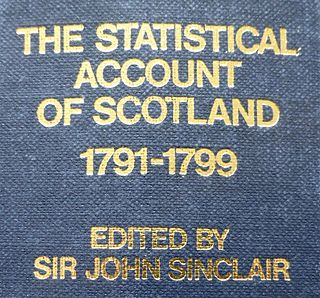
Figure 1.1: Statistical Account of Scotland by Sir John Sinclair (1791)
1.2 Statistics in its ancient past
Early evidence of statistical data collection was available from some of the oldest dynasties in the world. The Han Dynasty of China and the Roman Empire were some of the first to extensively gather data on the size of the empire’s population, geographical area and wealth. The use of statistical methods dates back to at least the 5th century BCE.
1.2.1 The wall of Platea
It is given by Thucydides, a historian and general in Athens, ancient Greece, in his scholarly work History of the Peloponnesian War(Thucydides 1985), how the Athenians put use of statistics to scale a wall and win a war. The work recounts the fifth-century BC war between Sparta and Athens until the year 411 BC. Soldiers calculated the height of the wall of Platea by counting the number of bricks in a non-plastered section of the wall. The count was repeated several times by a number of soldiers. The most frequent value (In statistics the term used for the most frequent value in a dataset is Mode) is considered most likely to be the number of bricks in the wall. Multiplying this value by the height of the bricks used in the wall allowed the Athenians to determine the height of the ladders necessary to scale the walls.

Figure 1.2: Part of the wall of platea
1.2.2 Trial of the Pyx
Evidence of the application of statistical sampling methods (sampling is discussed in detail in chapter XX) from 12th century can be seen from the* The Trial of the Pyx*. The Trial of the Pyx is a judicial ceremony in the United Kingdom to ensure that newly minted coins from the government owned mint (Royal mint) that produces coins for the United Kingdom conform to their required dimensional and fineness specifications. The ceremony has been held on a regular basis since the 12th century. The word pyx derives from the Greek, pyxis meaning wooden box; the boxes in which coins are stored. Coins to be tested are drawn from the regular production of the Royal Mint. The Deputy Master of the Mint must, throughout the year, randomly select several thousand sample coins (one coin for every ten pounds of silver minted) and place them aside for the Trial.
1.2.3 Statistics in Astronomy
Arithmetic mean (average) has been first used by Babylonian astronomers in the third century BC. The concept of the arithmetic mean originated from the Greek astronomer Hipparchus(Plackett 1958). Arithmetic mean was not generalized to more than two values until the 16th century. The invention of the decimal system by Simon Stevin a Flemish mathematician, physicist and military engineer in 1585 has influenced calculations with more than two values. Tycho Brahe, a Danish astronomer known for his accurate estimates of celestial positions than those of any predecessor or contemporary, first adopted the calculations involving mean with more than two values in astronomy.
References
actuary: A person who compiles and analyses statistics and uses them to calculate insurance risks and premiums.↩︎